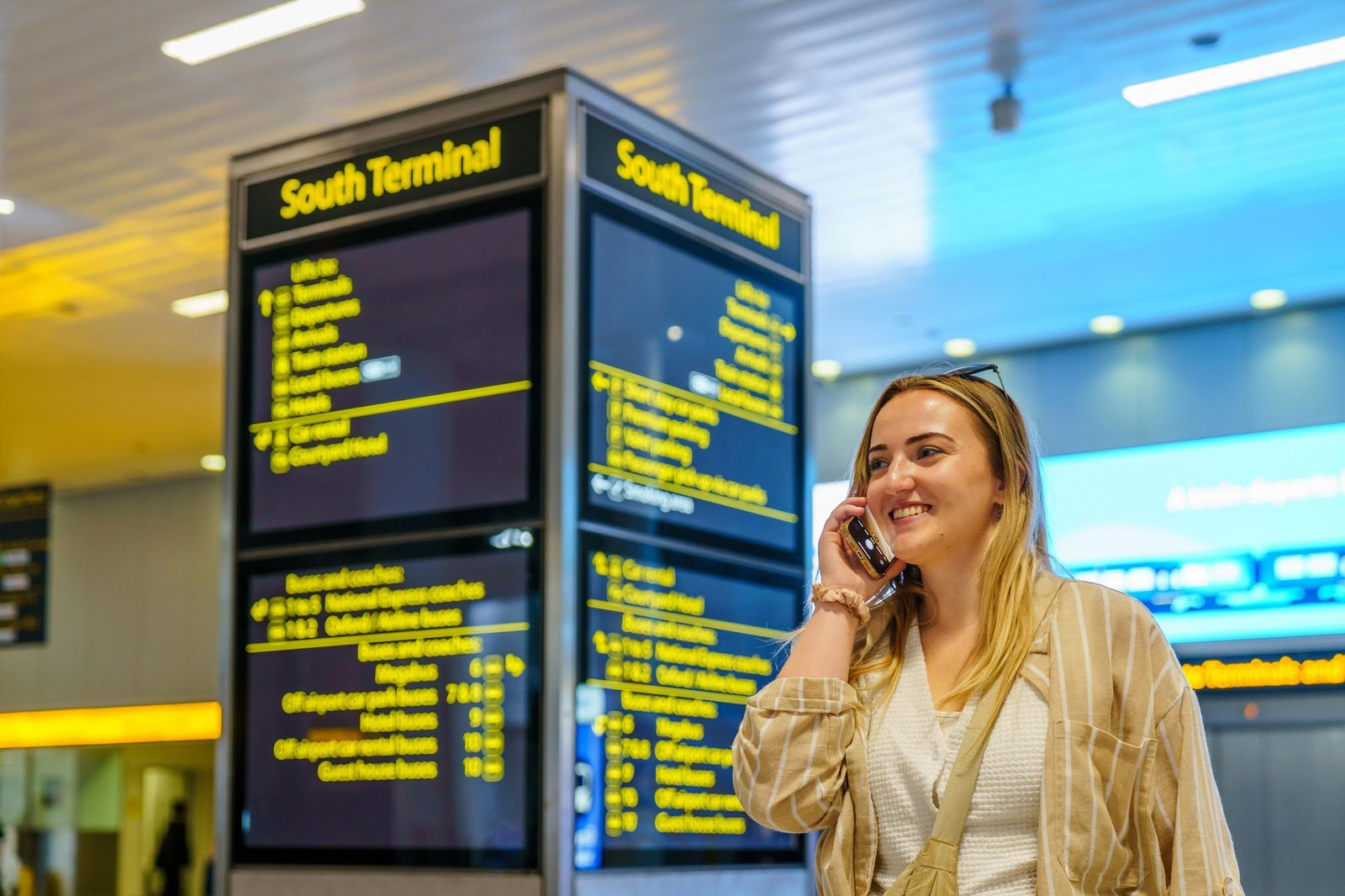
A train ticket is open on one phone, the hotel confirmation is in an email, and someone at home wants to know that the flight has arrived safely. For a visitor landing in Britain, a working phone matters before the journey from the airport begins. Yet the phone may still be set to a home network, roaming may cost extra, and an airport Wi-Fi connection is not something to rely on for the whole trip. A little preparation makes that first journey easier.
Mobile data, calls and local numbers: What do you need?
Start with what you expect to do on the trip. A visitor spending three days in London may only need data for maps, train times and messaging. Someone staying longer, viewing rental properties or arranging meetings may need to make ordinary calls or give local businesses a number they can reach.
These services are not interchangeable. A data-only eSIM provides internet access, but it does not give you a conventional UK mobile number. WhatsApp calls and messages work over data, while a hotel, letting agent or repair service may still want to call a telephone number.
For a specific short-term task, a temp number uk service may be an option. A visitor might use one to receive a one-time verification code or keep a booking contact separate from a regular number. Check the restrictions first: some services receive SMS only, some numbers are shared, and access may expire quickly. A temporary number is a poor choice for banking, account recovery or anything that needs a secure contact number after the trip.
Check your roaming deal before take-off
Open your mobile provider's app or website and check the UK roaming terms. Do not assume that a plan which covers Europe, or once included roaming in Britain, still does so on the same terms. Providers set their own rules and prices.
Look for the daily charge, the data allowance abroad and the cost of calls and texts. A domestic plan described as unlimited may have a separate roaming cap. Some operators sell a travel add-on for a set number of days; others charge for each megabyte or call. Checking first is cheaper than discovering the price after a day of using maps and mobile data.
Also check what happens to incoming SMS messages. If your bank sends a login code to your usual number, you may need to keep that SIM active even when another line provides internet access. Ask your provider whether receiving texts in the UK costs anything.
UK SIM or eSIM: Choose for the trip, not the label
A prepaid UK SIM can suit visitors who want a local number as well as data. It is available from mobile operators and retailers, and packages differ in their allowances for calls, texts and internet use. Check the top-up rules and validity period, particularly if you are staying for several weeks.
An eSIM is a digital SIM profile installed on a compatible phone. It can be bought online and set up before departure, so there is no need to find a shop after landing. But the word eSIM does not guarantee a UK phone number. Many travel packages are data-only. They are fine for maps, messaging apps and online bookings, but they will not provide ordinary UK calls or SMS.
Read the package details. Check how much data is included, how long the package lasts, which UK networks it uses and whether calls or texts are part of the deal. The phone must be unlocked and support eSIM. If it was bought through a mobile contract, check for a network lock before paying for a separate plan.
The first connection after landing
If the eSIM is installed before the flight, connecting after arrival should be a short settings check rather than a search for a shop. Once the phone is switched out of flight mode, select the travel eSIM for mobile data. Some plans connect automatically; others require data roaming to be enabled or a network to be selected manually. Follow the provider's instructions because the steps vary.
If there is no signal, check that the eSIM line is switched on and selected for data. Restarting the phone can prompt it to register with a local network. Airport Wi-Fi can be a backup for contacting support, but avoid entering sensitive account details on an unfamiliar public network.
On a dual-SIM phone, you can often keep your home number active for calls and verification texts while the UK eSIM handles data. Check the default line for mobile data before leaving the terminal, especially if your home provider charges roaming fees.
Coverage depends on where you are going
The UK's main mobile networks include EE, O2, Vodafone and Three. Travel SIM and eSIM providers may use one of these networks, so check which network supports the package rather than relying on the provider's brand name alone.
In central London, Manchester, Birmingham and Edinburgh, visitors will generally find good mobile coverage. A journey into the countryside can be different. Parts of the Scottish Highlands, rural Wales and remote coastal areas have weaker reception, particularly in valleys or away from larger roads. Train tunnels and crowded stations can interrupt a connection.
Think about the itinerary. A visitor travelling between London and Oxford has different needs from someone hiring a car to explore the Lake District. Download the route and map areas before setting off, save hotel addresses and keep booking confirmations available offline. That way, a patchy signal does not leave you searching through email at the roadside.
When is a British number worth having?
For a short holiday, many visitors can manage with their existing number and a data plan. Hotels, airlines and larger booking services commonly accept international contact details. WhatsApp is also widely used for messages, provided both sides have an internet connection.
A UK number may be useful for a longer stay, a property viewing, a local delivery or an appointment where the business expects to call you back. Before renting a temporary number, ask whether the organisation accepts it. Some services block temporary or shared numbers, and an SMS-only number will not help if someone needs to speak to you.
Think beyond the sign-up process, too. A temporary number may stop working when its rental period ends and could later be assigned to another person. Do not use it for banking, account recovery or services you will need after leaving Britain. If you expect regular calls or need the number for months, a prepaid UK SIM or a suitable monthly plan is usually more dependable.
A quick check before leaving the airport
Before heading for the train, taxi rank or car hire desk, check a few things:
- Confirm that the SIM or eSIM is active and that the phone is unlocked.
- Select the right line for mobile data and check the roaming setting.
- Open a map or train app to test the connection.
- Keep the home SIM available if you need calls or verification texts on your usual number.
- Save your accommodation address and essential booking details offline.
- Check that any local number can receive the type of call or message you expect.
A phone plan should fit the journey, not the other way round. Check roaming before departure, choose a UK SIM or eSIM based on the calls and data you need, and only pay for a local number if a real booking or contact requires one. With those details settled, you can concentrate on getting out of the airport and on with the visit.